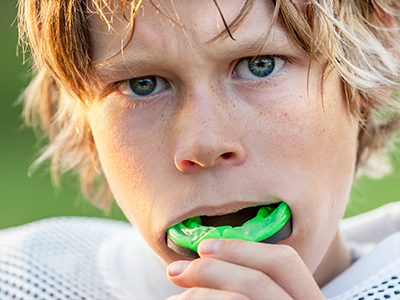
Sports-related dental injuries happen faster than most players expect. A stray elbow, a hard fall, or a ball traveling at speed can cause chipped or knocked-out teeth, lacerations to the lips and cheeks, and even jaw trauma. Wearing a properly fitted mouthguard is one of the simplest, most effective steps athletes can take to reduce the likelihood of those injuries.
Beyond the immediate pain and inconvenience, dental trauma often leads to lengthy treatment and missed time from sport and school. Preventive protection is about more than avoiding a dental bill — it’s about preserving long-term oral health and keeping athletes in the game. Coaches, parents, and players who take mouthguard use seriously often see fewer interruptions from avoidable accidents.
Understanding the options and getting the right fit are key. The remainder of this page explains the types of mouthguards available, the advantages of custom devices, how we fit them at our office, and practical tips for care and maintenance so your protection stays effective season after season.
There are three broad categories of mouthguards commonly found in sporting environments: stock (ready-to-wear), boil-and-bite, and custom-made guards from a dental professional. Stock guards are pre-formed and inexpensive, but they often provide poor fit and limited retention, which can make breathing and speaking more difficult during activity.
Boil-and-bite mouthguards offer a step up in fit because the material softens in hot water and can be molded around the teeth. They can work well for casual, short-term use, but their fit can still be imperfect and the materials vary widely in quality. Over time, repeated remolding can degrade the protective properties of the guard.
Custom mouthguards are fabricated from impressions or digital scans of an athlete’s teeth and designed to match the contours of the mouth precisely. Because they are tailored, they usually provide better retention, more consistent shock absorption, and improved comfort—factors that make it more likely the athlete will wear the guard when it counts.
Choosing among these options depends on the sport, the athlete’s needs (including whether braces or other dental work are present), and how often the guard will be used. For contact sports and for athletes who play frequently, a custom guard typically delivers superior protection and wearability.
While the primary role of a mouthguard is to shield teeth from fracture and displacement, a well-designed guard can also reduce soft-tissue injuries to the lips, cheeks, and tongue by providing a smooth, protective surface between the teeth and surrounding tissues. This simple barrier often prevents cuts and bruises that can occur during collisions or falls.
Properly fitted mouthguards can also help stabilize the jaw during impact, which may decrease damaging forces transmitted through the dental structures. For athletes undergoing orthodontic treatment, custom guards are particularly important because they are shaped to accommodate brackets and wires while still providing effective coverage.
It’s important to note that no mouthguard eliminates injury risk entirely, but wearing the right type of guard consistently reduces the severity and frequency of many common oral injuries. Discussing sport-specific needs with a dental professional helps ensure the chosen solution balances comfort and protection for the athlete’s situation.
When an athlete comes to our office, we begin with a focused evaluation of dental health, existing restorations, and any orthodontic appliances. This assessment determines which mouthguard style will offer the best combination of protection and comfort. Every mouth and every sport has unique demands, so personalization is central to the process.
Next, we capture the shape of the teeth and bite using precise impressions or intraoral digital scans. Those records allow a dental laboratory—or in-office fabrication system—to produce a guard that aligns with the athlete’s dental anatomy and occlusion. The result is a device that stays in place without excessive bulk, so it’s easier to breathe and speak naturally while wearing it.
After the mouthguard is fabricated, we verify fit and make any necessary adjustments. We’ll check retention, breathing comfort, and how the guard interacts with the bite, then show the athlete how to put it in and take it out correctly. A properly fitted custom mouthguard not only protects better, it’s also more likely to be worn consistently during practice and competition.
Taking care of a mouthguard is straightforward but essential for long-term performance. Rinse the guard with cool water after each use, brush it gently with a toothbrush and non-abrasive toothpaste or mild soap, and store it in a ventilated case to keep it dry and free from bacteria. Avoid leaving mouthguards in hot environments, such as a car dashboard, since heat can warp the material.
Create a routine for inspection: look for cracks, thinning areas, changes in fit, or persistent odors. These signs indicate the guard has worn down and is no longer providing reliable protection. Children and adolescents may need replacement more often because growth and tooth movement change the fit, while athletes who play high-contact sports may also require periodic replacement due to material fatigue.
If an athlete develops new dental work—such as crowns, bridges, or braces—or reports discomfort while wearing the guard, return to the dental office for an evaluation. Small adjustments can restore comfort and function, but sometimes a new device is the safer option. Proper care and timely replacement help ensure the mouthguard continues to perform when it matters most.
In summary, a well-chosen and properly fitted mouthguard is a practical investment in an athlete’s oral health and on-field availability. For personalized guidance and professional fitting, contact Dodson Brothers Dentistry to discuss options tailored to your sport, age, and dental needs. Our team is happy to help you find a protective solution that athletes will actually want to wear.


A sports mouthguard is a removable device worn over the teeth during athletic activity to absorb and distribute impact forces. It creates a smooth, protective barrier between the teeth and soft tissues to reduce the risk of chipped or displaced teeth, lip and cheek lacerations, and other intraoral injuries. Wearing a properly fitted guard also helps athletes avoid lengthy dental treatment and missed practice or school time.
Beyond immediate injury prevention, consistent mouthguard use supports long-term oral health by minimizing trauma that can require complex restorative care. Proper protection can preserve dental restorations and limit the likelihood of emergency visits after a collision. Discussing sport-specific risks with a dental professional helps athletes choose the right level of protection for their needs.
Three common categories are stock (ready-to-wear), boil-and-bite, and custom-made mouthguards from a dental professional. Stock guards are inexpensive and pre-formed but often provide poor fit and limited retention, while boil-and-bite designs can be shaped at home for improved fit but vary widely in material quality. Custom-made guards are fabricated from impressions or digital scans and are tailored to fit an athlete’s teeth, offering superior retention, comfort, and consistent shock absorption.
Choosing among these options depends on the sport, frequency of play, and any existing dental appliances such as braces or crowns. For contact sports or athletes who compete regularly, a custom device typically provides the best combination of protection and wearability. A dental evaluation clarifies which option balances comfort, safety, and practical considerations for each individual athlete.
A custom mouthguard is recommended for athletes who participate in contact sports, those who play frequently, and anyone with previous dental restorations or a history of dental injury. It is also strongly advised for athletes with orthodontic appliances because a tailored guard can accommodate brackets and wires while protecting soft tissues. Younger athletes, who face growth-related changes, and elite competitors often benefit most from the improved retention and durability of a custom device.
Parents and coaches should consider a custom guard when fit and consistent use are priorities, since a comfortable appliance increases the likelihood it will be worn during practices and games. Individuals who experience difficulty breathing, speaking, or keeping a store-bought guard in place may find a custom solution significantly more practical. A dental professional can evaluate specific needs and recommend the best approach for protection and comfort.
The process begins with a focused dental assessment to review oral health, restorations, and any orthodontic appliances that could affect fit. We capture the shape of the teeth and bite using precise impressions or intraoral digital scans to ensure the laboratory or in-office fabrication system has accurate records. These measurements allow creation of a device that follows the contours of the mouth closely while keeping bulk to a minimum for better breathing and speech.
Once the mouthguard is fabricated, we verify fit, retention, and how the guard interacts with the bite, then make any necessary adjustments chairside. We also demonstrate proper insertion, removal, and routine care so athletes and parents understand how to maintain optimal protection. Follow-up checks help confirm ongoing comfort and performance as teeth or appliances change over time.
Mouthguards are effective at reducing dental and soft-tissue injuries, and they can help stabilize the jaw during impact, which may alter how forces are transmitted through the head and neck. However, the scientific evidence on mouthguards preventing concussions is mixed and does not support the idea that any mouthguard can fully eliminate concussion risk. Most studies indicate that while certain designs may reduce some types of force, they should not be relied on as a primary concussion-prevention tool.
Because concussion risk involves complex biomechanical factors beyond oral protection, athletes and coaches should follow sport-specific head-injury protocols and use mouthguards as part of a broader safety strategy. Custom guards that offer superior retention and fit can reduce secondary injuries and are more likely to be worn consistently, which supports overall player safety. Discussing concerns with a dental or medical professional helps set realistic expectations for what a mouthguard can and cannot do.
After each use, rinse the mouthguard with cool water and brush it gently with a toothbrush and mild, non-abrasive soap or toothpaste to remove debris and bacteria. Store the guard in a ventilated case to allow drying and to protect it from damage or contamination between uses. Avoid exposing the appliance to high heat, such as leaving it on a car dashboard, because heat can warp the material and alter the fit.
Inspect the mouthguard regularly for cracks, thinning, or persistent odors that indicate material breakdown. If you notice changes in fit or integrity, stop using the guard and contact the dental office for an evaluation. Routine professional checks during dental visits can identify wear that warrants adjustment or replacement to maintain effective protection.
Replace a mouthguard when you observe visible signs of wear such as cracks, thinning areas, permanent deformation, or persistent bad odor that cannot be removed by cleaning. Children and adolescents generally require more frequent replacement because growth and tooth eruption change the fit over time, and athletes in high-contact sports may experience faster material fatigue. Any time dental work such as crowns, bridges, or changes from orthodontic treatment occur, the guard should be re-evaluated for proper fit and function.
If an athlete reports new discomfort, difficulty breathing or speaking while wearing the guard, or if retention becomes unreliable, schedule an appointment for an assessment. Small adjustments can sometimes restore comfort, but replacement may be the safest option if the device no longer seats correctly or shows significant wear. Regular inspection and timely action preserve the guard’s protective performance.
Yes, athletes with braces can and should wear mouthguards to protect both their teeth and the soft tissues from injury. Over-the-counter options may be difficult to fit over brackets and wires and can increase the risk of irritation, whereas a custom mouthguard is designed to accommodate orthodontic appliances while providing full coverage and retention. Custom devices reduce the chance of lacerations from brackets and help protect orthodontic work from impact damage.
Orthodontic patients should schedule a fitting to ensure the guard allows for necessary movement and adjustments during treatment. The dental team can recommend design features that minimize interference with braces and maintain effective protection. Regular follow-up ensures the guard continues to fit properly as teeth shift during orthodontic care.
Advances in materials and layered designs allow mouthguards to balance protection with thinner, low-profile profiles that reduce bulk while maintaining shock absorption. Some custom guards incorporate laminated layers or dual-density materials that place firmer material where impact resistance is needed and softer liners where comfort and retention matter. Design features such as contoured breathing channels and reduced posterior bulk can improve airflow and make it easier to speak and breathe during activity.
Choosing the right combination of material and design depends on the athlete’s sport, position, and personal comfort preferences. A dental professional can explain trade-offs between maximum protection and minimal profile so the athlete gets a usable device they will wear consistently. Trial fittings and small adjustments help fine-tune comfort without compromising safety.
To arrange an evaluation and custom mouthguard fitting, call (808) 214-9488 or visit our office at 1325 South Kihei Rd., Suite 102B, Kihei, HI 96753 during regular business hours. The appointment begins with a short dental assessment to review oral health, restorations, and any orthodontic needs that affect guard selection. We will then take impressions or digital scans and discuss design options appropriate for the athlete’s sport and level of play.
Bring any relevant equipment (helmet, face mask) and information about current orthodontic treatment or recent dental work to the appointment so the team can tailor the device accurately. Follow-up visits may be scheduled to check fit and make minor adjustments after fabrication. Our staff at Dodson Brothers Dentistry will explain proper care and replacement recommendations to ensure ongoing protection throughout the season.

Have questions, need to schedule an appointment, or want to learn more about our services?
Our friendly team is ready to assist you. At Dodson Brothers Dentistry, we make connecting with us easy, convenient, and stress-free.