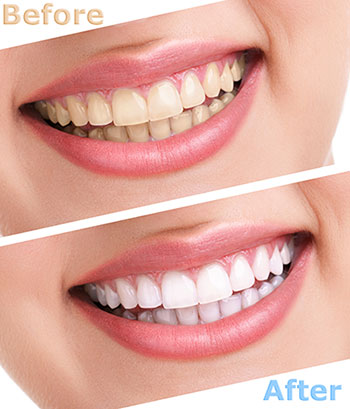
A teeth whitening procedure or bleaching simply refers to any process that will make the teeth appear whiter. It is considered a non-invasive procedure that is designed to whiten and brighten teeth that are stained, discolored, darkened, or yellowed. First introduced to the public in the 1980’s, the popularity of teeth whitening products and procedures has soared. According to a survey conducted by the American Academy of Cosmetic Dentistry, when respondents were asked, “What would you like to improve most about your smile?” The most common response was: whiter and brighter teeth.
How white a tooth appears depends upon how light is reflected and scattered off the enamel, the outermost layer of the tooth. Teeth can look dark or discolored for a variety of reasons, with an imperfect appearance the result of outer surface stains or discoloration from within the tooth. While external tooth stains are typically due to certain foods and tobacco, internal tooth discoloration is mainly the result of hereditary factors, certain medications, tooth decay, restorations, or trauma. Additionally, the aging process can influence the color of a tooth. This is because over time the outer layer of enamel becomes thinner showing more yellowish tones from the underlying layer of dentin.
What are the advantages of a professional teeth whitening procedure performed by a dentist?
Although over the counter teeth whitening systems purchased in stores or online have become popular, there are health concerns and limitations with these products. If the manufacturers protocol is not correctly followed, certain products can damage the teeth and soft tissues in the mouth, and may not deliver the results as promised. Teeth whitening systems contain varying concentration of either hydrogen peroxide or carbamide peroxide, which act as the bleaching agents. When sensitive teeth, exposed roots, cavities, broken fillings, cracked teeth, or loose dental work are present, a teeth whitening procedure may be contraindicated. Also, since whitening systems do not have an effect on the color of dental fillings, crowns or bridges the presence of restorations is an important cosmetic consideration in treatment planning.
In general, individuals with yellow tones to their teeth respond best to teeth whitening procedures. Brown and grayish tinted teeth bleach respond less well and may require significantly longer dentist supervised tooth whitening regimens or alternative cosmetic treatments. Finally, teeth whitening may not be recommended in the presence of sensitive teeth, worn enamel and significant gum disease.
As a rule the healthiest and most effective methods of teeth whitening are the ones managed and supervised by the dentist. An in-office teeth whitening procedure as performed by the dentist is the most reliable and safest way to get the maximum results quickly. In as little as one hour a prescription-strength, in-office whitening procedure can dramatically whiten and brighten the natural teeth by several shades, while the surrounding tissues and any sensitive areas of the teeth are carefully isolated and protected from the bleaching agents.
A home whitening system from the dentist along with custom trays that have been fitted to the teeth is also an excellent option. Custom trays keep the bleaching agent in maximum contact with the teeth and away from the other areas of the mouth. With a take-home teeth whitening system, maximum results are less rapid than an in office procedure and are typically achieved over a longer period of time. A home whitening system can be used by itself or as recommended by the dentist as a follow up to an in office procedure in order to perfect or maintain the results.


While an overwhelming selection of over-the-counter teeth whitening products is readily available for purchase at stores or online, it's imperative to keep in mind that the healthiest and most effective methods of care are those professionally supervised by your dentist. With a teeth whitening procedure provided by our office, we can safely, comfortably, and effectively transform your smile by up to several shades in a short amount of time.
Teeth whitening offers a simple and non-invasive way to whiten and brighten your smile. Whitening products contain various strengths of biologically safe hydrogen peroxide or carbamide peroxide that act as bleaching agents on stained or discolored dental enamel. By breaking the stains into smaller pieces, these bleaching agents make the color less concentrated and your teeth brighter.
Every patient is different, and despite the fact that many people experience no sensitivity or pain with a professional teeth whitening, there are some that do. Although considered a minimally invasive cosmetic procedure, some temporary discomfort during and following the procedure may ensue. It helps to stick to room temperature beverages for a few days following a teeth whitening. You can also take over-the-counter pain medication as you would for a headache. If you have a history of sensitive teeth, we may select a gentler formulation of whitening products or an alternative procedure.
It's essential to keep in mind that every patient has unique needs and specific requirements of care. In general, individuals with yellow tones to their teeth respond best to teeth whitening. Brown and grayish tinted teeth respond less well to bleach and may require significantly longer dentist-supervised tooth whitening regimens or alternative cosmetic treatments. Finally, teeth whitening may not be recommended in the presence of sensitive teeth, worn enamel, and significant gum disease.
For darkly stained teeth, a whitening procedure may not provide the cosmetic results desired. In these cases, we'll talk about alternative options such as porcelain veneers or full-coverage crowns.
Teeth whitening only works on natural teeth. The fact that whiteners do not affect the color of existing dental fillings, veneers, bonding, crowns, or bridges on the front teeth remains an important consideration when choosing the best cosmetic option in care.
As a rule, the healthiest and most effective methods of teeth whitening are the ones managed and supervised by your dentist. You can count on our office to provide the most effective, safest, and satisfying professional-strength options to whiten, brighten, and lighten your smile! Stay away from over-the-counter products, which may be overly abrasive or put the health of your teeth and the surrounding soft tissues at risk. While these products may work when healthy teeth and gums are present, they're often ineffective or problematic when sensitive teeth, exposed roots, cavities, broken fillings, cracked teeth, or loose dental work are the case.
How long your teeth whitening lasts depends on your lifestyle. Your eating, drinking, and smoking habits can have a significant impact on maintaining your result. Of course, the best way to ensure that your smile stays healthy and beautiful is a good daily oral healthcare regimen, along with regular dental checkups and cleanings.
It's essential to keep in mind that as a cosmetic dental procedure, a teeth whitening may not be covered by your insurance plan. We understand the financial considerations involved in care and do our best to help you get the treatment you need without any additional stress or delay. We offer several payment options and financing plans to make things easier.
At the office of Dodson Brothers Dentistry, we want every patient to enjoy the benefits of a smile that is as beautiful as it is healthy. In addition to offering a comprehensive range of advanced services to keep your smile in tip-top health, we also provide leading-edge cosmetic solutions to transform less-than-perfect-looking teeth into ones that dazzle.
Professional teeth whitening uses dentist-prescribed formulations and protocols to lighten tooth color in a controlled clinical context. These systems employ regulated concentrations of peroxide and delivery methods that are tailored to an individual’s mouth, which generally produces more consistent and predictable results than generic store-bought products. Licensed clinicians also take steps to protect soft tissues and monitor sensitivity during treatment to maintain patient comfort.
Over-the-counter products can reduce surface staining but are limited by lower active ingredient levels and one-size-fits-all application methods. Custom trays or in-office techniques provided by a dental team allow for even contact of whitening gel and reduce the chance of gum irritation or patchy outcomes. In short, professional care prioritizes safety, customization, and oversight to help achieve a smoother, more uniform improvement.
Good candidates are patients with natural tooth enamel who want to reduce extrinsic staining from foods, beverages, or tobacco and who have generally healthy gums and no active decay. A pre-whitening exam helps identify whether restorations, enamel wear, or underlying conditions might limit expected results or require treatment first. Patients with significant intrinsic discoloration may still benefit, but their clinician will explain realistic outcomes and alternative cosmetic options if needed.
Patients experiencing moderate tooth sensitivity should discuss it with their provider because protocols can be adjusted to reduce discomfort, such as using lower concentrations or staged treatments. Children and adolescents require a careful evaluation, and whitening is usually recommended only when growth and enamel maturity are appropriate. Ultimately, individualized assessment ensures whitening is both safe and effective for each person.
In-office whitening typically delivers faster, more immediate results using higher-concentration gels and professional isolation techniques, often completing significant whitening in a single visit. The clinician controls application time and can monitor sensitivity, making it a good option for patients seeking rapid improvement before an event or who prefer chairside care. Results from in-office sessions can be dramatic, but some cases still benefit from follow-up home maintenance to extend brightness.
Dentist-dispensed take-home kits use custom-fitted trays and lower concentrations of whitening gel for gradual daily or nightly use over a prescribed period. These kits offer greater convenience and are easier on sensitive teeth because patients control wear time and can pause or shorten sessions if discomfort arises. Many patients receive a combined approach — an in-office boost followed by take-home trays for touch-ups and longer-lasting results.
Tooth discoloration is broadly categorized as extrinsic or intrinsic, and the cause affects how well whitening will work. Extrinsic stains sit on the enamel surface and are caused by pigments in coffee, tea, red wine, tobacco, and some foods — these stains typically respond well to professional whitening. Intrinsic discoloration originates within the tooth structure and can result from aging, certain medications, trauma, or developmental conditions; some intrinsic stains lighten with peroxide-based treatments while others may be more resistant.
Gray or deeply embedded brown intrinsic stains often require more intensive whitening, extended protocols, or alternative cosmetic solutions like veneers or bonding to achieve a uniform appearance. A clinician will evaluate the type and depth of staining during a consultation and explain which approach is most likely to meet a patient’s aesthetic goals. This assessment helps set realistic expectations about the degree of improvement possible.
A typical in-office whitening appointment begins with a clinical exam and any necessary cleaning to remove surface plaque and ensure a healthy starting point. The clinician isolates the gums and soft tissues, applies the whitening gel to the teeth, and times the application according to the chosen system while monitoring for sensitivity. Depending on the protocol, multiple short applications may be used in a single visit to achieve the desired shade safely.
For take-home treatments, the visit includes impressions or scans for custom trays, instructions on how to load and wear the gel, and clear guidelines about duration and frequency. The dental team also reviews common side effects and provides strategies to manage sensitivity or irritation. Follow-up appointments or check-ins are scheduled as needed to track progress and make adjustments.
The most common side effect of whitening is temporary tooth sensitivity to temperature or touch, which usually appears during treatment and resolves within days after completion. Sensitivity can be managed with desensitizing toothpaste, fluoride treatments, or brief treatment pauses while maintaining overall progress toward the cosmetic goal. Soft-tissue irritation from gel contact is uncommon when custom trays and proper isolation are used, but clinicians can apply protective barriers and give guidance to limit gum exposure.
If sensitivity is persistent or severe, the clinician will modify the protocol by reducing concentration, shortening wear times, or recommending alternative approaches. Clear communication about symptoms during and after treatment allows the dental team to respond quickly and maintain both safety and comfort. Proper assessment before whitening also reduces the chance that preexisting conditions will worsen during treatment.
Longevity of whitening results varies with a person’s diet, oral habits, and baseline tooth color, but many patients enjoy noticeably brighter teeth for months to years with proper maintenance. Avoiding or moderating intake of highly pigmented foods and beverages, quitting tobacco, and rinsing or brushing after stain-causing meals all help preserve results. Using a take-home tray periodically for touch-ups or scheduling occasional in-office refreshers can extend the benefits significantly.
Daily oral hygiene — including brushing with fluoride toothpaste and regular flossing — also supports lasting outcomes by minimizing plaque and surface staining. Your dental team will recommend a maintenance schedule tailored to your habits and aesthetic goals, which may include occasional use of whitening gel at home or professional touch-up appointments. Consistent preventive care is one of the most influential factors in how long the whitening effect endures.
Peroxide-based whitening lightens natural tooth structure but does not change the color of dental restorations such as crowns, veneers, or composite fillings. If restorations are visible and matched to an older, darker shade, whitening natural teeth first and then replacing or color-matching restorations afterward is often the best strategy to achieve a uniform smile. This staged approach ensures restorations complement the newly whitened teeth rather than appearing mismatched.
During the consultation, clinicians document the presence and location of restorations and include that information in the treatment plan so patients understand any additional restorative steps that might be needed. In some cases, minimal restorative work after whitening provides the most cohesive aesthetic result. Clear coordination between whitening and restorative care produces a balanced, natural-looking outcome.
Certain oral health conditions should be addressed before beginning whitening to protect both the patient and the integrity of the results. Active decay, significant gum disease, or compromised enamel should be treated first because whitening can exacerbate sensitivity or produce uneven effects if underlying problems are present. A pre-whitening exam identifies issues that require attention and ensures whitening is both safe and appropriate.
Treating oral disease before cosmetic procedures also improves comfort during whitening and reduces the likelihood of unexpected complications. The dental team will recommend and prioritize necessary restorative or periodontal care and then re-evaluate readiness for whitening. This sequence of care supports long-term oral health while allowing patients to pursue aesthetic improvements responsibly.
Scheduling a consultation begins with a simple appointment request at our Kihei office, where a clinician will review your dental history, examine your teeth and gums, and discuss your smile goals to determine the most appropriate whitening option. During the visit, we evaluate restorations, check for conditions that should be treated first, and explain the expected results and maintenance needed to preserve whitening. This personalized consultation helps set attainable goals and creates a clear plan for treatment.
After the consultation, the team provides instructions for either an in-office procedure or a dentist-dispensed take-home kit and explains steps to minimize sensitivity and protect the gums. Patients receive guidance on post-treatment care and a recommended maintenance schedule to sustain results. If you have specific questions about how whitening fits into your overall dental care, the consultation is the ideal time to explore those details with the clinician.

Have questions, need to schedule an appointment, or want to learn more about our services?
Our friendly team is ready to assist you. At Dodson Brothers Dentistry, we make connecting with us easy, convenient, and stress-free.